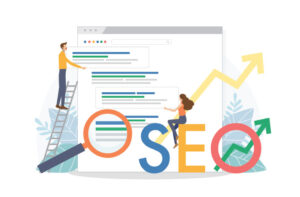

SEO (Search Engine Optimization) is the process of optimizing a website so that search engines can understand its content, structure, and context, and then choose to display it in organic search results rather than ads according to Google’s official documentation.
To put it more clearly, SEO is not just about pushing rankings higher. It is about communicating with search systems so they understand what the website is about, how trustworthy it is, and who should see it when searching for certain terms.
Put simply, SEO = help Google understand the website → match it with search queries → people find it → people click → customers are generated.
In an era where consumers begin with search before making a purchase, having visibility in search results has become an important part of digital marketing. If a business does not appear in search results, it is essentially not being considered in the decision-making process from the start.
What Is SEO (What Does SEO Mean)? A Simple Explanation
SEO is the process of optimizing a website’s structure, content, user experience, and credibility so that it matches what searchers are looking for and aligns with Google’s ranking systems, which do not look only at keywords, but also at whether the page genuinely answers the user’s question.
How Is SEO Different from Advertising?
- Advertising = paying money to appear immediately based on your budget
- SEO = improving quality so the system chooses to show your website based on relevance
The key difference is that when you stop paying for ads, the visibility stops. SEO, on the other hand, is a long-term asset. Once a page earns trust, it can continue bringing in visitors over time.
SEO is not Social Media Marketing
SEO does not directly make a post appear on social media, because search engines and social media platforms use different systems. However, high-quality content is often shared on social media, which can increase visibility indirectly. That happens because of the strength of the content itself, not because of SEO mechanics directly.
SEO and marketing (SEO Marketing): where does it fit in digital marketing?
SEO is an intent-based marketing channel, which means users already have a need or problem, so they type a search query. This is different from advertising, which tries to capture a user’s attention even when they may not need something immediately. As a result, traffic from SEO is often high quality because it happens at the exact moment users are genuinely looking for answers.
Its position in the marketing funnel
Awareness → Consideration → Conversion
- Awareness: Users search for knowledge, such as how to solve a problem, possible approaches, or basic explanations
- Consideration: Users compare options, reviews, pros and cons, and suitability
- Conversion: Users search for service providers, pricing, or how to get started
SEO can work at every stage because users search during every part of the decision-making process. If a website has content that covers every level, it can guide users from strangers to customers within a single channel.
SEO and online businesses
- E-commerce: People search for products before buying, comparing specs, prices, and reviews
- Local service: People search for nearby services they are ready to contact, such as shops, clinics, or technicians
- B2B: People search for solutions and knowledge before choosing a service provider
Businesses whose customers have clear questions or needs on Google benefit the most from SEO, because it reaches customers at the moment they are making decisions.
How does Google rank websites?
Google does not read websites the way humans do. Instead, it uses automated aanking systems to analyze which pages should be shown to searchers, based on multiple factors working together, such as content relevance, quality, trustworthiness, and user experience.
At a high level, the process has 3 stages:
- Crawl – bots come in to read website data
- Index – Google stores the information and understands the content
- Rank – Google chooses the most suitable page to display
Google does not use a single formula. It uses multiple systems together, such as systems that understand search meaning, evaluate content quality, and detect spam.
Put simply, Google is not asking, “Which page uses the most keywords?” It is asking, “Which page answers the user’s question best?”
What is Helpful Content?
Helpful Content is the concept Google uses to evaluate whether content is genuinely useful to users, with a focus on writing for people, not for manipulating the algorithm.
Content that fits this principle usually:
- Explains things clearly and in an easy-to-understand way
- Covers the topic well, rather than giving an answer that is too short
- Shows real knowledge or experience
- Is not written just to stuff keywords
If content does not help the searcher, then even with good structure or keywords, it may still not rank highly.
4 เสาหลักของการทำ SEO
1) Keyword และ Intent
ไม่ใช่แค่การเลือกคำค้น แต่คือการเข้าใจว่าผู้ใช้ต้องการคำตอบอะไร เช่น ต้องการความรู้ เปรียบเทียบ หรือพร้อมซื้อ เนื้อหาที่ตรงเจตนาการค้นหาจะมีโอกาสถูกจัดอันดับมากกว่า แม้ไม่ได้ใส่คีย์เวิร์ดซ้ำจำนวนมาก
2) On‑page SEO
คือการจัดโครงสร้างภายในหน้าให้เข้าใจง่าย ทั้งหัวข้อ (H1‑H3) เนื้อหาครอบคลุม การเชื่อมโยงบทความภายใน และความอ่านง่าย เพื่อช่วยทั้งผู้ใช้และระบบค้นหาเข้าใจว่าหน้านี้เกี่ยวกับเรื่องใดอย่างชัดเจน
3) Technical SEO
เกี่ยวข้องกับการทำให้เว็บไซต์ถูกอ่านและประมวลผลได้ถูกต้อง เช่น ความเร็วเว็บไซต์ การรองรับมือถือ โครงสร้าง URL Sitemap และการเข้าถึงของบอท หากโครงสร้างผิดแม้เนื้อหาดี ก็อาจไม่ถูกนำไปจัดอันดับ
4) Authority
คือความน่าเชื่อถือของเว็บไซต์ในสายตา Google เกิดจากการถูกอ้างอิงจากเว็บไซต์อื่น ความเกี่ยวข้องของเนื้อหา และความสม่ำเสมอของข้อมูล เว็บไซต์ที่มีความเชื่อถือสูงมักจัดอันดับง่ายกว่าในหัวข้อเดียวกัน
How Do You Make SEO Content Marketing Rank?
SEO content marketing is not about stuffing keywords. It is about fully answering the searcher’s question from beginning to end, while making both users and search engines understand that this content is the best answer on the topic.
Content that has a good chance of ranking usually includes these elements:
- It starts from a real problem or question that users are actually searching for
- It explains the main idea first, then goes deeper into the details
- It includes examples or real use cases
- It covers related sub-questions on the same page
- It is easy to read, with clear subheadings and a logical flow
- It is trustworthy and factually accurate
Google recommends writing content for users first, not for the algorithm.
The key idea is: 1 page = fully answer 1 topic. If the user does not need to go back and search again, that usually signals high-quality content in the eyes of search systems.
What Is an SEO Tool?
An SEO tool is a tool that helps analyze data. It is not something that makes rankings go up on its own, but it helps you make better decisions, such as understanding what people are searching for, which pages have problems, or why rankings have changed.
Main functions of SEO tools
- Analyze keywords and search popularity
- Check website health and errors
- See which pages are being crawled or not crawled
- Track rankings and user behavior
Free tools from Google, such as https://search.google.com can be used to see which keywords people use to find your pages and how users click into your site, which is basic information for improving SEO.
Does SEO take a long time?
In general, SEO does not produce immediate results because Google needs to collect user behavior data and test the quality of web pages before ranking them. Research has found that new websites often take several months before achieving rankings.
Estimated timeframes (depending on competition and website quality)
- Niche keywords: 1–3 months
- Medium-competition keywords: 3–6 months
- Large-market keywords: 6–12 months or more
Rankings usually do not rise in a straight line, but go through testing periods, fluctuations, and then become more stable when the system starts to trust the page.
Factors that make rankings rise faster or slower
- Existing domain credibility
- Content completeness
- Website structure
- User behavior after the click
KPIs That Should Be Measured
SEO performance should not be measured by rankings alone. It should also be evaluated based on traffic quality and business outcomes.
- Impressions: Is the website starting to be seen?
- Clicks: Are people interested in the content?
- CTR: Are the title and description attractive enough?
- Conversions: Are real customers or important actions being generated?
Higher rankings usually have a better chance of receiving more clicks, and a strong CTR can also improve the chances of better rankings because it reflects relevance to the searcher.
Common mistakes
- Writing content that does not match search intent: focusing on adding keywords but not actually answering the user’s question, which causes people to click in and leave immediately, so the system sees the content as not meeting their needs
- Having no website structure: articles are disconnected and not linked together, so Google cannot clearly understand what the business is truly an expert in
- Measuring the wrong KPIs: focusing only on rankings but ignoring clicks, visitor quality, or inquiries, which leads to a misleading view of results
- Publishing content once and leaving it: not updating information, causing rankings to gradually drop as the content becomes outdated
- Relying more on techniques than value: trying to adjust the structure for the system, but not actually increasing the usefulness for real readers

FAQ
What is the difference between SEO services and SEM?
SEM is paying for ads so a website appears immediately in search results, while SEO is improving website quality so the system chooses to show it organically over the long term. Google explains that organic results depend on relevance and content quality, not budget. Using both together can therefore support both short-term and long-term traffic.
Do I need software?
It is not necessary to use paid tools at the beginning, because Google Search Console can already be used to analyze search queries, clicks, and website issues. Tools are meant to help analyze data; they do not make rankings go up by themselves. Understanding the searcher is more important than having expensive tools.
Does it take a long time?
SEO takes time because the system needs to collect data and test page quality. Research shows that new websites often take several months before they start ranking. The actual timeline depends on competition, content quality, and domain credibility.
Why do rankings go up and then drop?
Rankings can change based on competition, user behavior, and search system algorithm updates. Google uses multiple systems to evaluate results at the same time, so results are always being adjusted. If content is not updated or competitors have better pages, rankings may decline.
Is SEO important for businesses?
Yes, because many users begin with search before making a decision, and the system aims to show the content that helps users the most. Having rankings therefore means reaching customers at the moment they genuinely need information.