
Search engine optimization is defined by the core principle: “If you want your website to rank on Google, SEO is essential.” For anyone who owns a website, I am certain you have heard this term before. But what does SEO actually mean? How does achieving a top rank on Google benefit your website and business? Let’s find the answers in this article.
Search Engine Optimization, or SEO for short, is the process of improving a website’s quality to support high rankings on Google. This involves both web design and the content provided on the site. Ranking at the top of Google results will significantly increase your website traffic, positioning your brand as the primary choice for customers and ultimately boosting your business sales.
Which rankings do most people click on?
According to a survey by HigherVisibility, a staggering 95% of searchers choose to click on websites listed on the first page. Specifically, 32% of users click the first result, 16% click the second, and 10% click the third, with percentages decreasing further down the list. Websites on the second page receive an average click rate of only 1%.
If you are planning to implement SEO, your ultimate goal must be the first page of Google! To ignore this is a massive missed opportunity for any business.
What is Search Engine Optimization? Why is doing SEO so important?
Marketing through SEO (SEO Marketing) is considered a vital process for online businesses that own a website. Yangdee believes that beyond just improving your rankings on search result pages, SEO offers several multifaceted benefits as follows:
-
Increase Website Visitors (Traffic)
Currently, the number of people searching for information via Search Engines is continuously growing. If a website ranks for keywords with high search volume, the chance of receiving significant Website Traffic increases accordingly.
Furthermore, when one keyword ranks well, related keywords often follow suit, drawing in visitors from terms you might not have explicitly targeted. If you maintain your SEO and update information consistently, traffic has the potential to grow steadily, building a solid customer base and helping the business achieve sustainable growth.
-
Boost Sales Opportunities for Products or Services
The essence of Search Engine Optimization is making a website discoverable through specific keywords. This makes it a highly targeted form of online marketing. People who visit a website via a Search Engine are already interested in that specific keyword, meaning there is a high probability they will purchase products or use services from the site they visit.
As website traffic increases, so does the opportunity for sales. This is an effective marketing method for increasing your Conversion Rate (the proportion of visitors who take a desired action).
-
Promote the Website and Brand Awareness
Most people searching for information will only look at websites on the first page or the immediate subsequent pages of search results. Having your website appear on the first page—especially in the top position—ensures your brand name is seen and recognized, even if the user hasn’t clicked through to the site yet.
This is an excellent way to build Brand Awareness. Importantly, users tend to trust websites that appear at the top of the results. This credibility and trust in top-ranking businesses make it much easier for customers to decide to purchase products or use services from that specific website.
-
Reduce Advertising Costs
Because SEO takes time for a website to reach the first page, it is best suited as a long-term marketing strategy. Unlike PPC (Pay-Per-Click) advertising directly with Search Engines, clicks on organic SEO results do not incur a per-click cost.
This helps reduce the burden of advertising expenses and is generally more cost-effective than advertising through other media. However, if you choose highly popular keywords with intense competition, the initial investment may be higher. Therefore, when selecting keywords, you must consider the marketing objectives and the Return on Investment (ROI) to ensure they are worthwhile.

On-Page SEO Strategy: Optimizing Your Digital Foundation
On-page SEO refers to the process of optimizing elements within your own website—including content, structure, technical coding, and design—to improve its visibility and ranking. To achieve effective Search Engine Optimization, you must follow these strategic steps:
-
Align with Business Goals: Select keywords that directly relate to your core business, whether they are specific products, services, or educational articles within your industry.
-
Analyze Search Volume: Prioritize keywords that people are actually searching for. Understanding Search Volume allows you to gauge the potential traffic each keyword can drive to your site.
-
Leverage Industry Tools: Use specialized tools to discover high-potential keywords and gain deeper insights. Recommended tools include:
-
Google Keyword Planner
-
KWFinder
-
Ubersuggest
-
Ahrefs
-
-
Categorize by Search Intent: Systematically organize your keywords based on product categories and, most importantly, Search Intent (the user’s goal behind the search). This ensures that the content you create provides the exact answers or solutions your target audience is seeking.
Keyword Examples by Intent:
1. Informational Keywords: These are terms used when people are searching for specific information or answers to their questions.
-
Examples: Japan tour, how to travel to Japan, where to visit in Japan.
2. Navigational Keywords: These are terms used to navigate directly to a specific website or physical location, usually when the user already has a particular brand name in mind.
-
Examples: AAA Tour Company, Thai Airways online check-in, Thai Airways counter Suvarnabhumi.
3. Commercial Keywords: These are terms used to gather information to assist in decision-making or to investigate options before committing to a purchase or service.
-
Examples: Which Japan tour company is best?, Japan tour reviews, Japan tour price comparison.
4. Transactional Keywords: These are terms used with the explicit intent to purchase a product, book a service, or complete a specific transaction.
-
Examples: Book Japan tour, Japan tour pricing.
Defining Primary and Secondary Keywords
To ensure each page on your website is as comprehensive as possible, you should define a primary and a secondary keyword for every category:
-
Focus Keywords: This is the primary term for your Search Engine Optimization efforts. It is usually a Broad Keyword—a short phrase with a wide meaning and the highest search volume.
-
Example: Japan Tour
-
-
Related Keywords: These are secondary terms that are contextually linked to the main topic. These are often Niche Keywords or Long-tail Keywords, which are much more specific and have a lower search volume compared to the primary term.
-
Examples: Japan tour packages, tours to Japan, cheap Japan tours, prices for Japan tours.
-
Designing Website Structure and Content Layout
A Sitemap (website diagram) should be created to assist in planning various web pages and to visualize the connectivity of each page. Content should be categorized according to the keyword groups defined during the Keyword Research process. Furthermore, web pages should be organized into a systematic, hierarchical structure to enhance the efficiency of Search Engine Optimization and effectively boost keyword rankings.
Examples of Implementation:
Website Hierarchy Structure:
-
Main Category Page → Japan Tours
-
Sub-category Pages → Tokyo Tours, Osaka Tours, Hokkaido Tours
Content Optimization Based on Search Intent: The content on each page must be specifically designed to satisfy the user’s Search Intent. A highly effective way to determine the right content type is by analyzing the websites that are currently ranking on the first page of Google for those specific keywords.
Practical Examples:
- Informational Keywords: * Example: “Japan Tour” * You should create a comprehensive “Japan Tour Service Page” that acts as a hub, collecting and showcasing all available Japan tour packages in one organized location.
- Navigational Keywords: * Example: “Thai Airways Online Check-in” * You should produce a helpful blog article or guide that provides step-by-step instructions and clear directions on how to complete the check-in process.
- Commercial Keywords: * Examples: “Which Japan tour company is best?” or “Compare Japan Tours” * You should develop a blog post or an expert review article that provides recommendations for reputable tour companies or offers a side-by-side comparison of different services.
- Transactional Keywords: * Examples: “Book Japan Tour” or “Japan Tour Price” * You can utilize your main “Japan Tour Service Page,” ensuring it is optimized for conversion with prominent “Book Now” buttons and clear pricing displays for each individual tour package.
High-Quality Keyword Integration
To achieve professional-grade Search Engine Optimization, keywords must be integrated strategically and naturally. It is not about the quantity of keywords, but the quality and relevance of their placement.
-
Assign Unique Focus Keywords: You should define a unique Focus Keyword for each individual page on your website. Avoid repeating the same primary keyword across multiple pages, as this leads to “Keyword Cannibalization,” where your own pages compete against each other. Having one clear target per page helps Google identify the best content to rank for a specific query.
-
Strategic Placement in Critical Elements: You should naturally weave your keywords into the most influential parts of each webpage, including:
-
Title Tag & Meta Description: These form the clickable headline and summary that appear on Google’s search results page.
-
H1 Tag: This serves as the primary headline of the page content.
-
H2 Tags: These act as sub-headers to organize your information logically.
-
Plain Text: The standard body copy where your information is detailed.
-
Alt Text (Alt Tag): The text descriptions for images, which help Search Engines “see” your visual content.
-
Anchor Text (A Tag): The clickable text within a hyperlink that connects to other relevant pages.
-
-
Prioritize Natural Readability: You must strictly avoid Keyword Spamming or Keyword Stuffing. Overloading your content with repetitive keywords is an outdated tactic that feels unnatural to the user and is often penalized by modern search algorithms. Always prioritize a high-quality reading experience for your users; if the content flows naturally, the SEO benefits will follow.
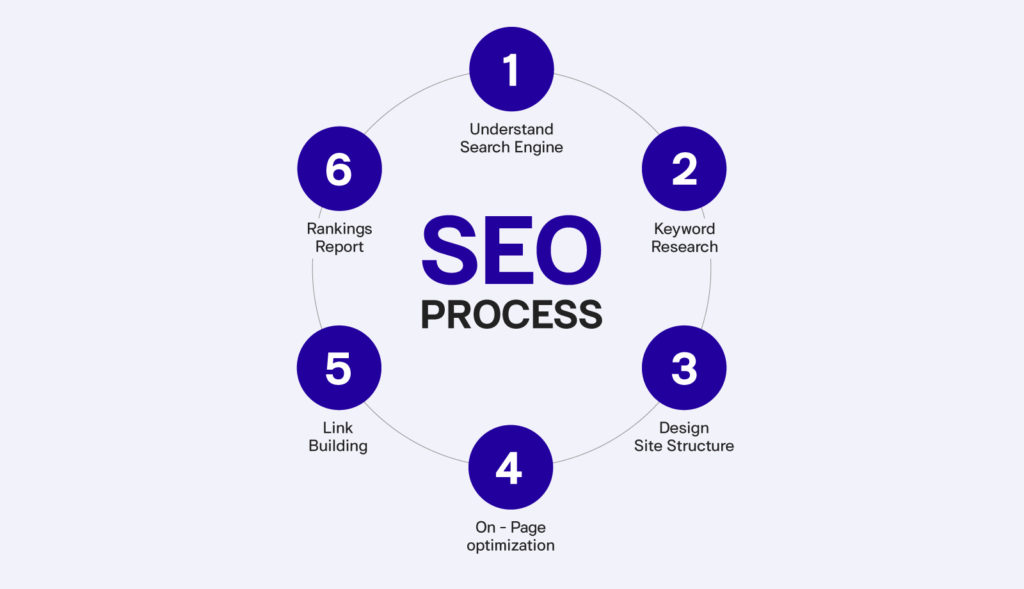
Creating and Expanding High-Quality Content to Satisfy Users
To truly excel in Search Engine Optimization, your content must serve two masters: the search engine algorithm and, more importantly, the human user. High-quality content is the primary vehicle for building trust and authority.
-
Develop Supporting Content and Strategic Linking: You should create relevant content designed specifically to bolster the SEO of your primary target pages. By developing a network of supporting pages with related topics and interlinking them effectively, you encourage users to explore your site further and help search engines crawl your content more efficiently.
-
Provide In-Depth and Authoritative Value: Focus on producing in-depth information that offers genuine utility. Aim to create the most comprehensive resource in your niche. When your content is significantly more valuable than what is currently available, it earns the favor of both users and Search Engines.
-
Direct Alignment with Search Intent: Every piece of content should be meticulously crafted to meet the specific needs of the user. By understanding the Search Intent behind various keywords, you can provide the exact answers or solutions that searchers are looking for, which significantly improves your engagement metrics.
-
Ensure Originality and Authenticity: You should always synthesize information and write your content from scratch using your own unique perspective. Strictly avoid plagiarizing from other sources and steer clear of using automated “article spinning” or low-quality automated rewriting tools. Authenticity is a key component of long-term SEO success.
-
Organize Content for Readability: Break your information down into clear main topics and sub-topics to ensure it is easy for users to digest. Use H2 through H6 tags in a logical, hierarchical order. This structure helps users navigate the page easily and allows Search Engines to grasp the semantic structure of your content.
-
Expand Your Digital Footprint Regularly: Continuously add new pages to your website, such as blog posts, knowledge bases, or industry insights. This new content must remain strictly relevant to your website’s core theme. For maximum impact, aim for a minimum length of at least 500 words per article to ensure you are providing enough depth to be considered “high quality” by modern standards.
Delivering an Exceptional User Experience (UX)
In modern Search Engine Optimization, the technical performance of your site is inseparable from the experience of the human user. Google prioritizes websites that are easy to use, secure, and fast. To truly satisfy your visitors, you should implement the following strategies:
-
Create a Mobile-Friendly Experience: Ensure your website is fully optimized for mobile devices. Currently, approximately 80% of all web traffic originates from mobile sources, and Google officially uses the mobile version of your content as the primary basis for indexing and ranking. We strongly recommend implementing a Responsive Web Design to ensure seamless display across all screen sizes.
-
Prioritize Professional UX/UI Design: Develop your website with a deep focus on User Experience (UX) and User Interface (UI) design principles. By making your site intuitive, aesthetically pleasing, and easy to navigate, you create a positive impression that encourages users to stay longer and return in the future.
-
Enhance Security with SSL Certificates: You should install an SSL Certificate to enable HTTPS. This provides an essential layer of security for data transmission, protecting your users and increasing the overall trustworthiness of your website in the eyes of both visitors and Search Engines.
-
Invest in High-Quality Hosting: Choose a premium, reliable hosting provider to ensure your website remains stable and avoids frequent downtime. A high-quality host can handle large spikes in traffic and is a fundamental component of maintaining rapid page-load speeds.
-
Integrate Engaging Visual Media: Strategically insert high-quality images or videos throughout your articles. This not only makes your content more visually appealing and easier to digest but also encourages users to engage with your page for a longer duration, which signals quality to Google.
-
Include Clear and Distinct Calls to Action (CTA): Every page must feature a visible and compelling Call to Action, such as “Purchase Product” or “Contact Us for More Information.” This provides clear direction for the user’s next steps and encourages them to explore more of what your business has to offer.
-
Optimize Page Loading Speed: Ensure your website loads almost instantaneously to prevent user frustration and high bounce rates. This can be achieved through technical optimizations such as implementing caching systems, reducing file sizes, converting images to the WebP format, and utilizing Lazy Loading so images only load as the user scrolls to them.
-
Avoid Intrusive Interstitials: Steer clear of disruptive advertisements or popups that obstruct the user’s ability to access your content (Intrusive Interstitials). Large popups that cover most of the screen frustrate users and are officially discouraged by Google’s ranking guidelines.
Optimizing Website Elements for Search Engine and User Friendliness
To truly bridge the gap between technical performance and human usability, you must refine the core structural elements of your website. These optimizations ensure that Search Engines can crawl your site with precision while providing users with a seamless, intuitive experience.
-
Implement Canonical Tags (rel=”canonical”): You should utilize Canonical Tags to specify the “preferred” URL for Google to index. This is crucial in cases where you have multiple pages with highly similar or duplicate content (such as different sorting options for products or tracking parameters). By pointing Google to a single “source of truth,” you prevent duplicate content issues and consolidate your ranking power.
-
Organize Intuitive Navigation (Breadcrumbs): Your website’s navigation should be clean, logical, and highly accessible. Implementing Breadcrumbs helps users understand their current location within your site’s hierarchy and provides Search Engines with a clear map of your site’s architecture.
-
Example: Home › Product › Category › Sub-category
-
-
Prioritize Static over Dynamic URLs: You should choose a Static URL structure that Search Engines can easily parse and index. Avoid using Dynamic URLs that contain complex symbols or parameters such as “?” and “=”. Static URLs are significantly more stable and easier for search algorithms to understand.
-
Design User-Readable URLs: Your URLs should be descriptive enough for a human to read and understand the page’s content before even clicking.
-
Use English Slugs: We recommend using English terms rather than non-Latin characters (like Thai script) to ensure maximum compatibility across all browsers and search systems.
-
Use Hyphens as Separators: Use the “-” symbol to separate words for better readability.
-
Example:
..../what-is-seo/
-
-
Strategic Multi-Language URL Management: If your website serves users in multiple languages, you must provide a unique URL for each language version (e.g.,
.../en/,.../jp/).-
Avoid Cookie-Based Language Switching: Never rely on cookies to change languages without changing the URL. If the URL remains the same regardless of the language shown, Search Engines will likely only be able to index one version, leaving your other international pages invisible to searchers.
-
-
Leverage Schema Markup: You should implement Schema Markup (Structured Data) to provide Google with a deeper, machine-readable context of your content. This increases the likelihood of your site appearing with “Rich Snippets” (such as star ratings, prices, event dates, or FAQ dropdowns) in the search results, which can dramatically improve your click-through rate (CTR).
Maintaining Momentum: Regularly Updating Your Website
In the world of Search Engine Optimization, “freshness” is a critical ranking signal. A stagnant website suggests to Google that the information may be outdated, whereas a frequently updated site signals a vibrant, active business that continues to provide value to its users.
-
Refine and Enhance Target Pages: You should consistently review and improve the text on the pages you want to rank highest. By adding new insights, updating data, or expanding on sub-topics, you ensure your content remains the most comprehensive and up-to-date resource available. This prevents “content decay” and helps maintain your competitive edge.
-
Keep Content Fresh with New Information: Continuously inject new life into your website by adding latest products, company news, seasonal promotions, or a gallery of your most recent projects. This practice encourages Google’s crawlers to visit your site more frequently and provides your audience with a reason to return, ultimately building stronger brand loyalty.
Summary: Navigating the Future of Your Search Engine Optimization
Understanding how search engines operate and identifying the specific attributes used to rank content is essential for any business owner. This knowledge empowers you to create content that doesn’t just exist, but actually ranks.
While algorithms are in a constant state of flux and offer no permanent guarantees, certain core pillars remain the bedrock of success: Backlinks, Authority, and a deep alignment with Search Intent. These are the factors that truly move the needle in the long run.