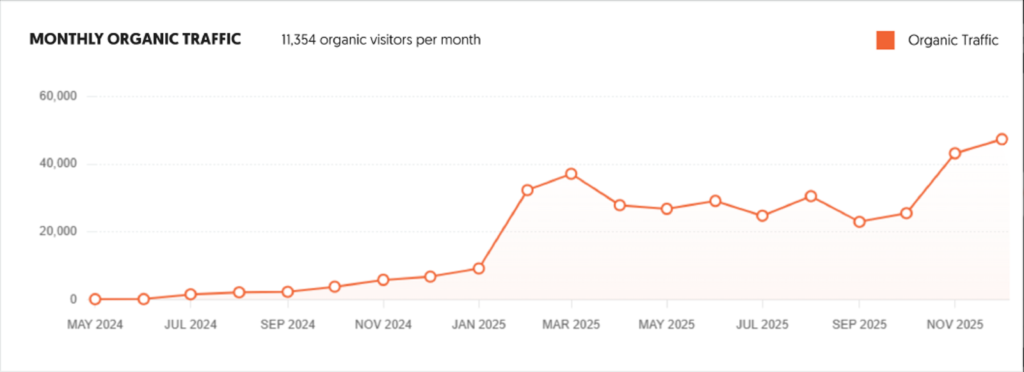
SEO stands for Search Engine Optimization. It is a term used in the internet and digital marketing world that refers to optimizing a website so search engines can understand its content, structure, and page context, and then choose to show it in organic search results rather than paid ads,) based on Google’s documentation.
The core idea is not to force the system to display the page, but to make the system “confident” that this page is the most suitable result for the user’s search query, based on factors such as relevance, content quality, and user experience.
In the shortest form: SEO = making a website easy to be found in search and more likely to be chosen above other websites.

What Does SEO Stand For?
SEO is an abbreviation for the English term:
Search = the act of searching
This refers to users typing questions or terms into Google to find information, products, or services.
Engine = search system
This is Google’s system that reads an enormous number of websites and selects the pages that best match the user’s query.
Optimization = making something more suitable or effective
This means improving a website’s content, structure, and details so search engines can understand it more easily.
Combined, SEO means optimizing a website for search engines so the system is more likely to show it before other websites when people search.
– How do you pronounce SEO?
SEO is pronounced “S-E-O,” saying each letter one by one. It is not pronounced as a single word.
In English, it is read the same way as other abbreviations like URL or HTML.
– What kind of term is SEO?
It is a technical term used in digital marketing and online business. It refers to the process of helping a website appear on Google without paying for ads, and more broadly, to the methods used to make information easier to find on the internet.
What Does SEO Mean? (The Simplest Explanation)

When we search for something on Google and websites appear, that is the result of SEO. Search systems try to choose the pages that “answer the question best” and show them before others.
Put simply, if a page explains something clearly, is easy to understand, and matches what people want to know, the system is more likely to choose that page first, even if no money was paid.
Real-life examples
Search for “how to tie a tie” → you see a website with step-by-step instructions
Search for “coffee shop near me” → you see nearby shops based on your location
Search for “which phone model is best” → you see comparison reviews
Search for “how to relieve back pain” → you see advice articles
These websites did not necessarily pay Google. They were chosen because they matched the search and genuinely helped the user.
What happens if there is no SEO?
The website may not be found, even if it has good information, because the system does not understand what the content is about or is not confident about who should see it.
The result is that the information becomes almost hidden on the internet, even when people are searching for it.
How Does SEO Work? (Without Using Difficult Terms)
Google does not recognize a website immediately. It has to gradually learn about it through 3 automatic steps:
- Crawl – Google’s program (bot) visits the web pages and reads the text, links, and images, like a person opening and reading each page
- Index – The system stores the information it has read and tries to understand what each page is about and which terms it relates to
- Rank – When someone searches, the system chooses the page that best matches the question and shows it first
The process is explained in more detail in How Search Works: https://www.google.com/search/howsearchworks/how-search-works/ranking-results/
– How does Google know what a website is about?
It looks at many things together, such as the page title, the written content, the words used, the connections between pages, and the context of the website as a whole. It does not look at just one word.
– Why do some websites appear before others?
Because the system evaluates that those websites answer the searcher’s question more clearly, are easier to understand, and are more trustworthy, so they are chosen to be shown first.
How is SEO different from advertising?
SEO = organic results (the system shows them because the content is relevant) SEO = organic results (the system shows them because the content is relevant)
The main differences are:
- The main differences are:
- Ads focus on budget and campaign setup
- SEO takes time, but the results can last longer
- Ads show results quickly, but once you stop paying, they disappear immediately
A simple example: if you write a good article and people can still find it in search even without doing anything more = SEO If it disappears once you stop paying = advertising
So, SEO is like building a permanent house, while ads are like renting a billboard.
What Is an SEO Tool?
An SEO tool is a tool that helps analyze website data so you can understand what needs to be improved. It is not a tool that instantly boosts rankings with one click.
Main functions of SEO tools
- See which search terms people use to find the website
- Check errors on web pages
- View impressions and clicks
- Analyze which pages need improvement
Free Google tools such as https://search.google.com/search-console/about can be used to view all the basic search performance data and are a good starting point for SEO.
How is SEO important to the internet?
SEO is what helps organize the enormous amount of information on the internet and makes it easy to find. Without SEO, users would have to open websites one by one to look for answers, which would be almost impossible in a world with millions of web pages.
Search systems therefore use SEO principles to choose the most relevant content to show, allowing users to reach knowledge, products, and services within seconds.
From the user’s perspective, SEO is a shortcut to answers.
From a website’s perspective, SEO is the opportunity to be discovered.
Understand SEO in 5 sentences
- SEO is the process of helping search systems understand what a website is about.
- It is not about buying space, but about making the system choose to show the website.
- Google selects the pages that help searchers the most.
- Tools help analyze data, but they do not increase rankings by themselves.
- SEO is the foundation that gives a website visibility on the internet.
FAQ
– How do you pronounce SEO?
It is pronounced “S-E-O,” saying each letter one by one, just like other abbreviations such as URL or HTML. It is not pronounced as a single word because it is a technical abbreviation used in the internet field.
– What does SEO stand for?
SEO stands for Search Engine Optimization, which means improving a website so search systems can understand its content and choose to show it when people search for relevant terms.
– Does SEO mean getting to the first page?
Ranking on the first page can be a result of SEO, but the core of SEO is making the content match what searchers want as closely as possible. When the system sees that a page answers the question well, it has a better chance of reaching the first page.
– Do I need software?
You do not need paid software to get started, because free tools can already be used to view basic data and improve content. Tools are meant to help analyze, not to raise rankings on their own.
– How is SEO different from advertising?
SEO is about improving website quality so the system chooses to show it organically, while advertising is about paying to appear immediately. SEO takes more time, but the results usually last longer.